


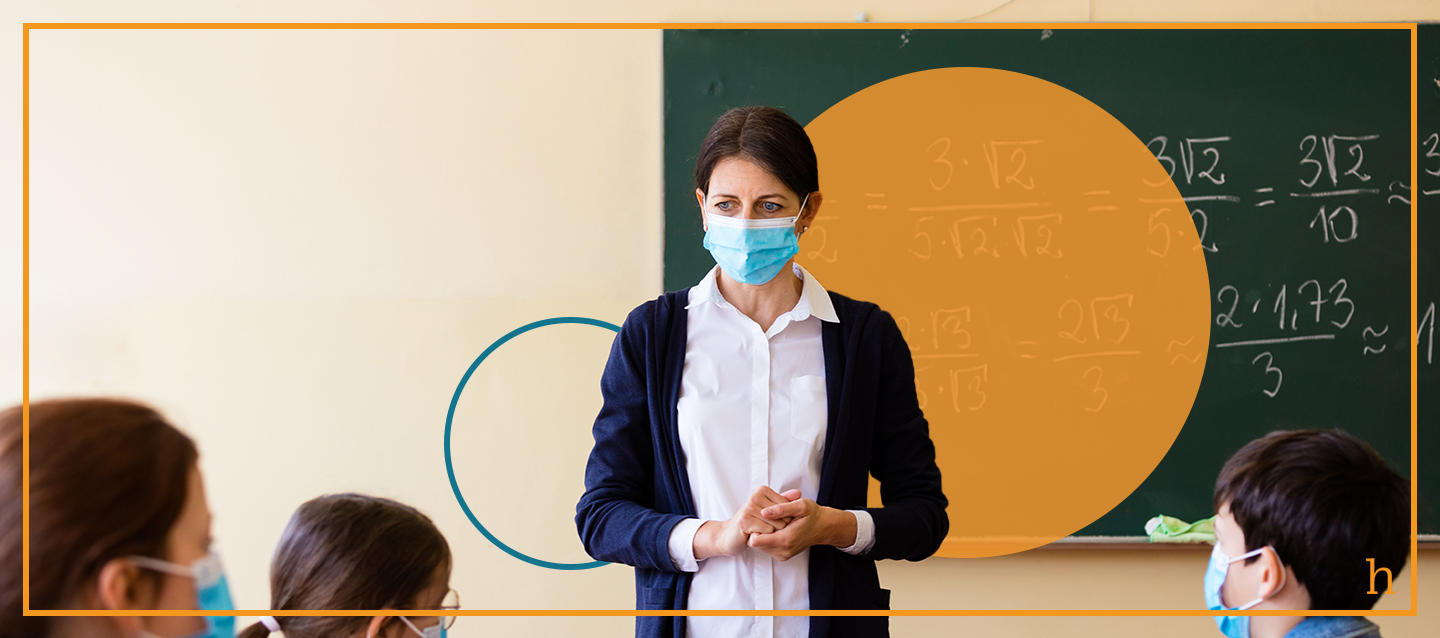
We have all been impacted by the pandemic in different ways. Teachers, however, have had a much different experience than the rest of us; whether teaching online, or risking their health by educating in person, teachers found their day-to-day changed dramatically in March 2020, continuing with pivots and revamps as the pandemic continues.
Pandemic or no, teachers already suffer more job-related stress than other professions. When our educators are stressed, it impacts our economy, children, and education system.
Teacher Stress
Teacher stress is a serious problem. Before the pandemic, teacher shortages were at an all-time high, and stress is the number one reason people are leaving the profession. One study showed that 77% of teachers regularly feel stressed, 75% feel anxious, and 74% feel overwhelmed. Another study revealed that the stress of teaching is equivalent to working in the ER.
At any given time, teachers experience most, if not all, of the following stressors:
- Disengaged and uninterested students
- Conflict and discipline problems
- Difficult relationships with parents
- Lack of instructional support
- Receiving poor preparation for educating in training institutions
- Dealing with difficult school administrators
- Feeling unsafe in the school environment
- Long hours
- Low pay
- Lack of resources
- Class size —teacher to student ratio
Chronic stress leads to burnout, health issues, decreased job satisfaction, and, ultimately, teacher shortages. As Dr. Lisa Sanetti notes in her 2019 Ted Talk, "Chronically stressed teachers attend school less often, have poorer relationships with their students, and are less effective in delivering instruction and managing student behavior."
Chronically stressed educators impact students on both a physiological and psychological level. If teachers exhibit dysfunctional coping strategies, it magnifies issues that arise within teacher-student interactions. Further, due to the presence of mirror neurons and developing empathy, children who witness stress in teachers are more likely to experience stress themselves, releasing the stress hormone cortisol, making it more challenging to focus and learn.
Teaching During the Pandemic
The difficulty of teaching during the pandemic has been well-publicized. The stresses of COVID-19 led many teachers to retire early or quit the profession altogether. It was challenging to find qualified teachers before 2020, but the pandemic made teacher shortages an existential threat to the profession.
Entering into a fully remote academic environment exasperated existing stressors and created new ones. High School Science Teacher, Haylen Gonzalez, explained to Humantold, "Everything I had known about teaching up until the pandemic was not useful. We had to start from scratch."
School closures meant that teachers had to quickly adapt, adopting new technologies, while changing lesson plans to fit the new format, all while managing their own children/families at home.
The pandemic means teachers are working longer hours, under more complex conditions. 77% of educators are working more today than a year ago, 60% report less job enjoyment, and 59% do not feel secure with their school's health and safety precautions. "We're trying really hard, but it's just not the same as being in person," Gonzalez explains.
Supporting Teacher Wellbeing
Highly stressed educators are not able to perform their job functions in a way that does not impact children. While important, child wellness is not the only reason to support teacher well-being. Teachers are human beings and deserve emotional wellness.
Practicing self-care is one of the most important things you can do to manage professional and personal stress. Things like meditation, therapy, and yoga are all excellent ways to process and manage chronic stress.
Teaching is a high stress job. Teachers need more support from parents, administrators, and, especially, government legislation. In order to set our society up for future success, we need to empower our teachers to succeed. We can do that by making teaching an appealing profession again by providing them with better pay, more resources, and better systems for emotional support.